


Pan-European Concert Report | November 2026!
November has brought another remarkable chapter to the 2026 Autumn–Winter season of the EU Jazz & Blues Festival, transforming Europe’s historic concert halls, celebrated jazz clubs, cultural centres and intimate musical spaces into meeting points for exceptional artists and audiences.
From Barcelona to Copenhagen, from Paris to London, from Brussels to Dortmund and Ingolstadt, this international programme demonstrates the extraordinary diversity of contemporary jazz and blues. It embraces the great traditions of American jazz, the sophistication of European improvisation, the expressive power of blues, the irresistible energy of soul, the experimental possibilities of electronic music and the grandeur of orchestral collaboration.

The programme brings together established masters, Grammy-winning performers, distinguished European instrumentalists, innovative composers and musicians whose individual voices continue to expand the boundaries of contemporary music.
There is a particularly beautiful artistic dimension to this November programme: the coexistence of different generations and musical cultures.
The timeless vocabulary of bebop and hard bop meets modern jazz harmony; acoustic intimacy encounters electronic soundscapes; blues traditions converse with contemporary soul, funk and rock. Every concert contributes a different colour to the larger European musical panorama.
The following report celebrates the artists, venues and musical encounters of this extraordinary season.
Samara Joy – Barcelona, Spain

A voice of extraordinary elegance at Palau de la Música Catalana
13 November 2026 | Barcelona! One of the most beautiful vocal events of the November programme was the appearance of the extraordinary American jazz vocalist Samara Joy at the magnificent Palau de la Música Catalana.
On November 13, Barcelona welcomed an artist whose remarkable rise has brought a renewed sense of excitement to traditional jazz singing. With six Grammy Awards to her name, Joy represents a generation that understands the importance of jazz history while approaching its repertoire with freshness, individuality and remarkable artistic maturity.
Her appearance at the Palau was particularly meaningful. This extraordinary concert hall, with its spectacular modernist architecture, stained glass and magnificent decorative details, provided an ideal setting for a vocalist whose music depends upon atmosphere, emotional nuance and the beauty of acoustic sound.
Joy’s artistic language is rooted in the great tradition of vocal jazz. The influences of Sarah Vaughan, Betty Carter, Abbey Lincoln and Carmen McRae can be heard in the sophistication of her phrasing, yet her personality remains unmistakably her own. She possesses a warm, beautifully focused voice, a natural sense of swing and an exceptional ability to make every lyric sound like a personal conversation.

The Barcelona programme presented her with a septet, bringing a richer instrumental dimension to her latest artistic chapter, Portrait. The repertoire connects the music of jazz masters, including Charles Mingus and Sun Ra, with new lyrical interpretations and arrangements. The result is a dialogue between the established jazz canon and a young singer’s individual imagination.
What distinguishes Samara Joy is not simply her vocal technique. It is her understanding of musical space. She knows when to allow a phrase to breathe, when to delay a resolution, when to place a word just behind the beat and when to let the rhythm section carry the emotional direction of a song.
Her performance at this historic Barcelona institution was a fitting celebration of jazz singing at its most refined: elegant, intelligent, emotionally generous and deeply connected to the tradition. It was one of the defining vocal highlights of the festival’s November programme.
Robert Glasper – Blue Note London, United Kingdom

Contemporary jazz, neo-soul and the freedom of musical conversation
13 November 2026 | Blue Note London! The London programme welcomed one of the most influential musical personalities of contemporary American jazz: pianist, composer and producer Robert Glasper.
His concert series at Blue Note London brought together jazz, R&B, hip-hop, gospel and contemporary soul in a musical language that has become one of the most recognisable expressions of twenty-first-century urban music.
Glasper’s importance lies in his ability to cross musical boundaries without losing the sophistication of jazz. His piano playing is harmonically adventurous, rhythmically flexible and full of unexpected colours. He can move from delicate acoustic passages to electronically influenced textures, from sophisticated chord voicings to deeply rhythmic improvisations, always maintaining a strong sense of musical identity.
The intimacy of a jazz club is particularly appropriate for this kind of performance. Glasper’s music depends upon communication, spontaneous decisions and the relationship between musicians. His concerts often feel less like fixed presentations and more like living conversations in which each performer contributes something unexpected.
The following evening brought an especially exciting collaboration with English singer-songwriter Marsha Ambrosius. Her distinctive voice, combining soulfulness, emotional intensity and refined R&B phrasing, offered an ideal counterpart to Glasper’s harmonic imagination.
Their musical meeting created the possibility of a rich dialogue between the expressive freedom of jazz piano and the emotional directness of contemporary soul singing.

Ambrosius possesses a remarkable ability to communicate vulnerability and strength within the same vocal phrase. Against Glasper’s fluid harmonic background, her voice becomes both a melodic centre and an expressive instrument in its own right.
This collaboration also reflects Glasper’s wider artistic philosophy: jazz is not a closed historical category but an open musical environment capable of absorbing influences from different generations and genres.
The Blue Note London residency was therefore more than a series of concerts. It was a celebration of contemporary musical freedom, the creative relationship between jazz and soul, and the continuing relevance of improvisation in modern music.
Marc Copland – 80th Birthday Celebration

A lifetime of piano poetry at Le Bal Blomet, Paris
13 November 2026 | Le Bal Blomet, Paris, France! Paris offered a particularly distinguished jazz occasion with the celebration of the eightieth birthday of the great American pianist Marc Copland.
At the historic Le Bal Blomet, Copland was joined by an exceptional European ensemble: Belgian saxophonist Robin Verheyen, bassist Stéphane Kerecki and drummer Fabrice Moreau.
This concert represented a beautiful encounter between generations, musical sensibilities and artistic experiences. Marc Copland is one of those pianists whose importance cannot be measured through technical virtuosity alone. His musical personality is defined by extraordinary harmonic sensitivity, an almost painterly approach to colour and a remarkable ability to create emotional landscapes through the smallest musical gestures.
His piano language is subtle and sophisticated. Chords appear like changing shades of light; melodies develop through unexpected harmonic turns; silences become an essential part of the musical architecture. His improvisations often possess the intimacy of chamber music, yet they retain the freedom and spontaneity that make jazz such a living art.
Robin Verheyen’s saxophone brought a complementary European perspective. His lyrical imagination, rich tone and adventurous approach to improvisation created an especially rewarding dialogue with Copland’s piano.

Stéphane Kerecki provided the harmonic and rhythmic foundation, contributing the flexibility and sensitivity that allow an ensemble of this kind to move naturally between composed material and spontaneous invention.
Fabrice Moreau’s drumming added colour, subtle propulsion and rhythmic imagination without overwhelming the music’s delicate architecture.
The significance of this birthday celebration extended beyond the occasion itself. It was a tribute to a musician who has devoted decades to exploring the expressive possibilities of jazz piano, continually refining his musical language and inspiring younger artists.
At Le Bal Blomet, the atmosphere of Parisian jazz tradition met the living creativity of contemporary European improvisation. The evening stood as an affectionate artistic salute to Marc Copland and to the enduring beauty of a life dedicated to music.
Chris Minh Doky and The Nomads – Ingolstadt, Germany

International bass artistry and the power of collective groove
Stadttheater Ingolstadt | Ingolstadt, Germany! The German programme continued with the internationally acclaimed Danish bassist Chris Minh Doky and his group, The Nomads, in a special musical encounter involving the German band heavytones at Stadttheater Ingolstadt.
Chris Minh Doky is a musician whose artistic identity is closely associated with the modern evolution of the bass guitar. His playing combines extraordinary technical control with a strong melodic imagination, a sophisticated rhythmic vocabulary and a deep understanding of contemporary jazz and funk.
The bass in his hands becomes much more than a supporting instrument. It is a melodic voice, a rhythmic engine and an essential part of the harmonic architecture.
The Nomads provide a natural environment for this musical philosophy. Their ensemble identity suggests openness, movement and a willingness to explore different directions, from contemporary jazz fusion to sophisticated groove-based compositions.

The participation of heavytones added another dimension. Known for their experience in contemporary entertainment, funk, soul and large-ensemble performance, the German musicians brought a powerful rhythmic and orchestral sensibility to the occasion.
The meeting of these artists offered an opportunity to explore the relationship between improvisation and precision. Deep bass lines, energetic percussion, sophisticated harmonic textures and tightly coordinated ensemble passages created the foundations for an exciting musical experience.
The Stadttheater provided a distinguished cultural setting for this international encounter. It was another example of the festival’s ability to connect national musical communities and create unexpected artistic partnerships.
Jean Toussaint Quintet – London, United Kingdom

The living heritage of Art Blakey’s Jazz Messengers
13 November 2026 | World Heart Beat Embassy Gardens, London! London’s jazz programme also welcomed the outstanding American-born saxophonist Jean Toussaint, a musician whose career connects the great hard-bop tradition with the vitality of contemporary British and international jazz.
A former member of Art Blakey’s legendary Jazz Messengers, Toussaint carries an important musical inheritance. The Messengers represented one of the great schools of jazz ensemble playing, combining powerful rhythmic energy, blues foundations, memorable compositions and the freedom of individual improvisation.
Toussaint has developed this inheritance into a personal musical language, distinguished by a strong tenor saxophone sound, expressive phrasing, rhythmic assurance and an impressive compositional imagination.
At World Heart Beat Embassy Gardens, his quintet presented music drawing on original compositions and distinctive interpretations of standards. The programme’s mixture of swing, blues, funk and groove reflected the many dimensions of his experience.

The quintet format is particularly suited to Toussaint’s musical personality. It allows the saxophone to interact closely with the piano, bass and drums, creating opportunities for intricate exchanges, dynamic changes and extended improvisational passages.
The concert also connected established artistic experience with the next generation of London’s jazz musicians. The announced programme included young pianist Nnamdi Nnachi-Cole, whose expressive playing and developing musical identity offered an additional perspective on the evening.
Toussaint’s appearance was an important reminder that the legacy of Art Blakey’s Jazz Messengers remains alive not as a museum piece, but as an active creative tradition. Its spirit continues through musicians who understand that jazz requires discipline, courage, individuality and an unbreakable sense of collective communication.
Blues Alive XXX – Šumperk, Czech Republic

Thirty years of blues passion, international friendship and authentic roots music
12–13 November 2026 | Dům kultury Šumperk and associated festival venues! The anniversary was especially meaningful because Blues Alive represents more than a sequence of concerts. It is a cultural institution devoted to preserving the living traditions of blues while presenting the artists who are transforming its language for new generations.
The programme brought together established American performers, internationally recognised blues personalities and contemporary musicians whose work reflects the continuing vitality of the genre.
Among the major attractions was seven-time Blues Music Award winner Janiva Magness, one of the most compelling voices in contemporary American blues. Her singing possesses an extraordinary combination of power, vulnerability and emotional honesty. She understands the blues as a language of human experience, capable of expressing pain, resilience, love, disappointment and liberation. Her performances combine the traditions of classic soul-blues with the directness and intensity of modern roots music.
Another important name was Danielle Nicole, an exceptional singer and bassist whose artistic personality combines soulful vocals with an impressive command of the electric bass. Her musical approach is particularly distinctive because she treats the bass as an expressive lead instrument. Her performances are driven by strong rhythmic foundations, dynamic vocal delivery and an instinctive understanding of the relationship between blues, soul and contemporary rock.
The festival also featured the highly regarded young guitarist and singer D.K. Harrell. His music reflects a deep understanding of traditional electric blues, while his own playing demonstrates the confidence, precision and emotional directness of a new generation. His guitar language draws upon the heritage of the great blues masters but avoids becoming merely imitative. The result is an expressive combination of traditional phrasing, powerful tone and contemporary energy.
The programme also announced the special partnership of guitarists J.D. Simo and Luther Dickinson, an exciting combination of American roots traditions, Southern rock and Mississippi blues.

The thirtieth anniversary programme also embraced blues education, discussions, masterclasses, film screenings and late-night jam sessions. The festival’s official programme included a guitar masterclass with J.D. Simo before his travel cancellation, a listening session with Luther Dickinson and Petr Vizina, and numerous performances across its main and courtyard stages.
This broader cultural programme is especially important. Blues is not only a musical genre; it is a history, a social experience and an artistic tradition that connects generations.
The festival’s achievement over thirty years has been to maintain that living connection. It has created a European meeting place where the American blues tradition is respected, contemporary artists are celebrated and audiences can experience the music in all its emotional and stylistic diversity.
Šumperk once again became a destination for authentic blues culture, and this anniversary edition was a major contribution to the European blues calendar.
Anders Gaardmand and Christina von Bülow – Copenhagen, Denmark

Two distinguished saxophone voices in a celebration of Danish jazz
13 November 2026 | La Fontaine, Copenhagen! Copenhagen’s celebrated jazz club La Fontaine offered an especially attractive programme featuring two distinguished Danish saxophonists: Anders Gaardmand and Christina von Bülow.
Their appearance in a quartet brought together two individual musical personalities whose approaches are deeply rooted in the jazz tradition.
Gaardmand, on tenor saxophone, has developed a sound shaped by years of experience in the Danish and American musical environments. His playing is characterised by a blues-inflected tone, rhythmic vitality and an instinctive understanding of the relationship between jazz, funk and soul. His experience includes a decade in New York, where he performed with major artists such as Etta James and Dr. John.
This background has contributed to a musical identity that combines Scandinavian refinement with the directness and rhythmic energy of American jazz.
Christina von Bülow, meanwhile, brings a wonderfully distinctive voice to the Danish jazz scene. Her alto saxophone sound is warm, lyrical and elegant, with a natural affinity for the cool-jazz tradition. Her musical sensibility reflects the influence of Lee Konitz and Stan Getz, but her artistic personality is entirely individual. She has an exceptional ability to make a melody sound effortless, allowing the music to develop through subtle phrasing, beautiful tonal colours and understated improvisation.
The club’s programme promised bebop, ballads, blues and energetic swing. This combination provided an ideal framework for the meeting of the two saxophonists.

The contrast between Gaardmand’s blues-rich tenor sound and von Bülow’s airy alto phrasing created a particularly attractive musical dialogue.
Their instruments could exchange melodic ideas, respond to each other’s improvisations and explore the possibilities of different rhythmic and harmonic approaches.
La Fontaine is a fitting home for this kind of jazz. Its intimate atmosphere encourages close listening, spontaneous communication and the preservation of the essential relationship between musicians and audience.
This Copenhagen concert celebrated the richness of Danish jazz and demonstrated how a strong musical tradition can remain fresh, personal and full of life.
DeWolff – Dortmund, Germany

A powerful celebration of blues-rock energy
Blue Notez e.V. | Dortmund, Germany! The festival’s blues-rock dimension was represented by the Dutch power trio DeWolff, whose energetic musical identity has established them as one of the most exciting contemporary European groups working at the intersection of blues, psychedelic rock and classic rock.
Their appearance at Blue Notez e.V. brought a very different atmosphere from the more intimate acoustic and chamber-jazz experiences elsewhere in the programme.
DeWolff’s musical language is rooted in the great traditions of electric blues and psychedelic rock. Their sound evokes the expressive freedom of late-sixties and early-seventies rock while incorporating a contemporary understanding of dynamics, production and instrumental interaction.
The band’s approach is built around the powerful relationship between guitar, organ and drums. The electric guitar provides the melodic and expressive centre, the organ creates a rich harmonic environment, and the drums drive the music forward with an energetic, often explosive rhythmic foundation.
What makes DeWolff particularly interesting is their ability to combine vintage instrumentation and stylistic references with a genuinely contemporary performance attitude.
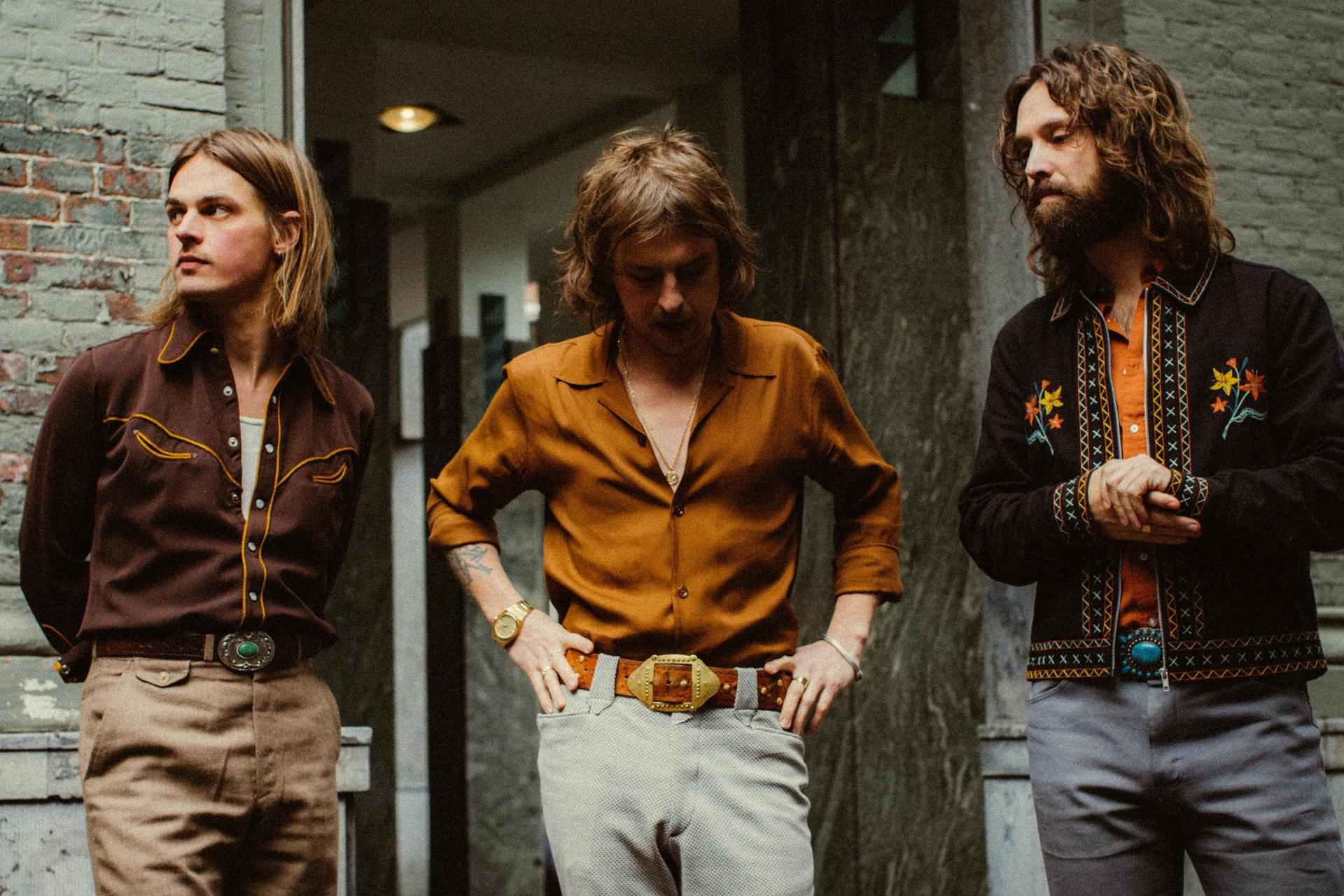
Their concerts are characterised by extended instrumental passages, powerful improvisations, shifting rhythmic intensity and a willingness to allow musical ideas to develop beyond conventional song structures.
At Blue Notez, the band’s energetic blues-rock identity offered an exciting contrast to the refined jazz performances of the wider festival. It was a reminder that the blues remains one of the most important sources of inspiration for modern rock music.
Ina Forsman – After Dark Hour, Part II

Vintage soul, blues and the irresistible atmosphere of a late-night performance
Osnabrück, Germany | After Dark Hour Tour, Part II! Finnish singer Ina Forsman brought her distinctive combination of vintage soul and blues to the German programme with the second part of her After Dark Hour tour.
Forsman has developed a remarkable musical identity through her understanding of classic soul, rhythm and blues, and the expressive traditions of American roots music.
Her voice possesses a wonderfully characteristic grain and emotional depth. It can sound intimate and delicate in a quieter passage, then expand into a powerful, commanding delivery when the music calls for greater intensity.
The vintage aesthetic of the After Dark Hour concept provides a natural environment for her artistic personality. The musical atmosphere evokes the golden era of soul and blues, yet the performance is not simply an exercise in nostalgia.

Forsman’s singing carries the emotional immediacy of an artist who understands these traditions from within. Her phrasing, dynamic control and instinctive relationship with rhythm make her a compelling interpreter of music that depends upon authenticity and feeling.
The concert in Osnabrück represented the soulful, atmospheric side of the EU Jazz & Blues Festival, offering a warm and emotionally expressive experience within the wider European programme.
It was a celebration of the enduring relationship between blues and soul: two traditions that share a common emotional vocabulary and the ability to transform personal experience into universal musical expression.
Goldie – Dare to Dream

Drum-and-bass meets the orchestra at London’s Royal Festival Hall
14 November 2026 | Royal Festival Hall, London, United Kingdom! One of the most ambitious and conceptually exciting events of the November season was the presentation of Dare to Dream by the pioneering British musician Goldie at the magnificent Royal Festival Hall.
Goldie is a major figure in the development of British electronic music, particularly drum-and-bass and jungle. His artistic influence extends beyond DJ culture into composition, visual art and collaborations that have brought electronic music into dialogue with orchestral performance.
The Dare to Dream project represented an especially ambitious artistic undertaking, bringing together Goldie’s live band, the Elysian Collective, a choir and an ensemble of distinguished guest musicians.
Among the announced guests were jazz drummer and producer Yussef Dayes, vocalist Cleveland Watkiss, singer Natalie Williams, anaiis, Skin, and the exceptional British musical personality Noel Gallagher.
The concept was particularly compelling because it explored the relationship between electronic rhythmic structures and the expressive possibilities of orchestral music.
Goldie’s musical universe is built upon breakbeats, powerful bass frequencies, atmospheric textures and emotionally charged melodic material. His landmark album Timeless demonstrated how drum-and-bass could transcend the dancefloor and become a form of expansive musical storytelling.

In Dare to Dream, this vision was developed through a larger orchestral and vocal framework. The presence of Yussef Dayes was especially significant. One of the most exciting drummers of his generation, Dayes has developed a highly individual rhythmic language influenced by jazz, broken beat, funk, African musical traditions and contemporary electronic culture. His participation offered an organic connection between the improvisational spirit of jazz and the rhythmic architecture of drum-and-bass.
Cleveland Watkiss brought another important dimension. His extraordinary vocal versatility and deep experience in jazz, reggae, soul and experimental music made him a natural participant in a project that refuses to respect conventional stylistic boundaries.
The Royal Festival Hall, with its grand concert architecture and capacity for large-scale musical presentation, was an ideal venue for this ambitious collaboration.
The performance demonstrated the possibilities of a contemporary musical language in which orchestral writing, improvisation, electronic rhythm and vocal expression can coexist within a unified artistic vision.
It was one of the most adventurous events of the season and a powerful example of the festival’s commitment to presenting music beyond traditional genre definitions.
Asha Puthli – The Cosmic Voyager

A pioneering voice travelling between jazz, Indian music and cosmic funk
14 November 2026 | Barbican Centre, London, United Kingdom! The appearance of Asha Puthli at the Barbican Centre was one of the most distinctive artistic events of the November programme.
An extraordinary singer whose career has crossed the boundaries of jazz, Indian classical music, avant-garde experimentation, disco and electronic soul, Puthli is a genuine pioneer of international musical fusion.
Born in Mumbai, she developed an artistic identity shaped by Indian musical traditions, Western classical training and an adventurous interest in contemporary jazz. Her international recognition grew significantly through her collaboration with Ornette Coleman on the landmark album Science Fiction. Her unusual vocal approach, combining ethereal textures, operatic technique and improvisational freedom, immediately distinguished her from conventional jazz singers.
Puthli’s influence also extends into the development of cosmic disco and sophisticated electronic funk. Her music helped establish a new expressive territory in which jazz improvisation, Indian melodic ideas and dance-oriented rhythms could coexist.
The title The Cosmic Voyager was particularly appropriate for an artist whose musical identity has always been associated with exploration, imagination and the freedom to travel between different artistic worlds.

The Barbican performance featured special guests including sitarist Anoushka Shankar, trumpeter Yazz Ahmed and percussionist Sarathy Korwar.
This combination created a particularly rich cultural context, bringing together different generations of artists who have developed distinctive approaches to the relationship between jazz and South Asian musical traditions.
Puthli’s voice remains the central element of this universe: mysterious, elegant, expressive and capable of moving between delicate atmospheric passages and more dramatic vocal statements.
The concert was an important celebration of artistic independence and international musical dialogue. It reminded audiences that many of the ideas now considered central to contemporary global music were being explored by visionary artists decades ago.
Asha Puthli’s appearance at the Barbican was therefore not simply a retrospective tribute. It was an opportunity to recognise the continuing relevance of a pioneering musical imagination.
L’Antidote, Naïssam Jalal and Roberto Negro

Landscapes of Eternity – Music as a meeting place of cultures
14 November 2026 | Cadogan Hall, London, United Kingdom! At the distinguished Cadogan Hall, the festival presented an unusually beautiful double programme, bringing together two artistic projects united by their exploration of musical dialogue, cultural identity and contemplative expression.
The first ensemble, L’Antidote, brought together three remarkable instrumentalists: Albanian cellist Redi Hasa, Iranian percussionist Bijan Chemirani and Lebanese pianist Rami Khalifé.
Their collaboration is built upon the meeting of different musical traditions. Mediterranean influences, Persian rhythmic structures, contemporary classical composition and jazz sensibilities combine to create a sound world of extraordinary expressive potential.
Redi Hasa’s cello provides a lyrical centre, capable of producing both delicate melodic lines and deeply resonant textures. Chemirani’s percussion brings rhythmic complexity and an organic connection to traditional musical cultures, while Khalifé’s piano contributes harmonic depth, dramatic contrast and compositional sophistication.
The second part of the evening presented Landscapes of Eternity, featuring French-Syrian flutist and composer Naïssam Jalal alongside pianist Roberto Negro. Inspired by Jalal’s journeys through North India, this project explores the relationship between music, nature, spirituality and the contemplative traditions of Hindustani music.
Jalal’s flute possesses a remarkable expressive range. Its sound can be intimate and breath-like, then suddenly expand into an intense melodic statement. Negro’s piano provides an imaginative harmonic environment, responding sensitively to the flute’s melodic direction.

The beauty of this duo lies in its restraint. Rather than relying upon constant activity or technical display, the musicians create a space in which every phrase becomes meaningful.
Together, the two projects formed a programme of exceptional cultural richness. They demonstrated how music can transcend geographical and stylistic boundaries while preserving the identity of its individual traditions.
Cadogan Hall was an ideal environment for this experience. Its distinguished acoustic setting allowed the subtle details of the instruments to emerge clearly, creating an atmosphere of attentive listening and artistic reflection.
This was one of the most poetic and culturally expansive programmes of the November season.
Raffaele Casarano – Brussels, Belgium

Mediterranean lyricism and the new language of Italian jazz
14 November 2026 | La Tricoterie, Brussels, Belgium! Brussels welcomed the outstanding Italian saxophonist and composer Raffaele Casarano to the cultural venue La Tricoterie.
Casarano is one of the important personalities associated with Italy’s new generation of jazz musicians. His artistic approach combines the expressive traditions of jazz with Mediterranean lyricism, contemporary composition and a broad international perspective. His musical language is characterised by melodic sensitivity, an imaginative use of instrumental colour and an openness to influences from different cultural environments.
Coming from Salento in southern Italy, Casarano brings a particular geographical and emotional identity to his music. The Mediterranean world is not simply a background but an important element of his artistic imagination. His saxophone playing can be lyrical and introspective, but it also possesses considerable energy and rhythmic drive. His compositions often explore the meeting of different musical traditions, creating a sound that feels simultaneously rooted and adventurous.
Throughout his career, Casarano has collaborated with internationally recognised musicians, including Richard Bona, Sting, Noa, Dhafer Youssef and Manu Katché. These encounters have contributed to his broad artistic vocabulary and his understanding of jazz as an international language.
The Brussels appearance formed part of his European live tour and offered an opportunity to revisit important compositions from his career while introducing music connected with his forthcoming artistic chapter.
La Tricoterie provided a suitable setting for this encounter between Italian musical identity and the wider European jazz community.
The concert celebrated a contemporary jazz language in which Mediterranean warmth, improvisational freedom and compositional sophistication come together naturally.
Jakob Dinesen and Albert Sanz Quartet – Copenhagen, Denmark
Scandinavian lyricism meets Spanish piano passion at Jazzhus Montmartre

14 November 2026 | Jazzhus Montmartre, Copenhagen! The Copenhagen programme concluded this remarkable collection of international encounters with a particularly attractive collaboration between Danish tenor saxophonist Jakob Dinesen and Spanish pianist Albert Sanz.
Their appearance at the historic Jazzhus Montmartre brought together two distinctive European musical personalities, supported by bassist Felix Moseholm and drummer Martin Maretti Andersen.
The programme was built around the meeting of Dinesen’s warm, expressive tenor saxophone and Sanz’s harmonically rich piano playing.
Jakob Dinesen is a highly respected figure in Danish jazz, known for his versatility and his ability to move between different musical environments. His work has included collaborations with international jazz musicians and projects ranging from contemporary fusion to deeply swinging acoustic jazz.
His tenor sound is warm and open, with a lyrical quality that makes him particularly effective in ballads and melodic improvisations. He possesses a natural sense of phrasing and an ability to create long musical lines without sacrificing rhythmic vitality.
Albert Sanz brings a contrasting but complementary personality. One of Spain’s prominent jazz pianists and composers, he has developed a musical language incorporating Brazilian rhythms, classical harmonic ideas and contemporary jazz improvisation. His playing is full of colour, rhythmic flexibility and melodic imagination.
His ability to move between sophisticated harmonic structures and expressive melodic passages makes him an ideal partner for Dinesen.

The programme’s description of their music as Slow Flow was particularly appropriate. It suggested a musical environment in which improvisation could develop naturally, without unnecessary haste, allowing each musician to explore the emotional possibilities of the material.
Moseholm’s bass and Andersen’s drums completed the quartet’s musical architecture, providing a flexible rhythmic foundation and enabling the saxophone and piano to engage in an ongoing conversation.
Jazzhus Montmartre itself carries an important place in European jazz history. Its intimate atmosphere and long tradition of presenting international jazz masters make it one of Copenhagen’s most significant cultural institutions.
The concert was a beautiful example of European jazz at its most personal: two different musical cultures meeting through melodic sensitivity, harmonic imagination and the shared freedom of improvisation.
Olivia Peevas – Director and Organizer of the EU Jazz & Blues Festival 2026

A vision of European musical unity, artistic excellence and cultural friendship
The Autumn–Winter Jazz – Blues Season is an impressive expression of what a European music festival can become when artistic ambition is combined with organisational dedication, international cooperation and a genuine love of music.
Olivia Peevas deserves particular recognition for bringing together such a broad and diverse programme, connecting cities, countries, concert halls, musicians and audiences through a shared appreciation of jazz and blues. Her work represents more than the coordination of individual concerts. It involves creating a coherent artistic experience across an entire continent, where every performance contributes to a larger cultural narrative.
The geographical scale of the 2026 season is especially impressive. Barcelona, London, Paris, Copenhagen, Brussels, Dortmund, Ingolstadt, Osnabrück and Šumperk become interconnected points on a European musical map.
Each city contributes its own cultural identity, architectural beauty and musical traditions. Each venue offers a different atmosphere, from the magnificent Palau de la Música Catalana to the intimate atmosphere of La Fontaine and the historic Jazzhus Montmartre.
Olivia Peevas‘s programme also demonstrates an understanding of the importance of artistic diversity. The inclusion of Samara Joy, Robert Glasper, Marc Copland, Jean Toussaint, Goldie, Asha Puthli, Raffaele Casarano and the many distinguished blues performers reveals a broad and adventurous curatorial perspective.

It is particularly commendable that the festival does not restrict itself to one definition of jazz or blues. Instead, it recognises the extraordinary relationships between traditional jazz, contemporary improvisation, soul, funk, electronic music, blues-rock and world music.
This openness makes the festival relevant to different generations of listeners and provides opportunities for audiences to discover artists and musical traditions they might not otherwise encounter.
Another important achievement is the festival’s European dimension. By connecting established cultural institutions with smaller independent venues, the programme celebrates both the great concert traditions of Europe and the intimate environments in which jazz and blues continue to flourish.
Olivia Peevas‘s leadership reflects the understanding that music festivals are also cultural bridges. They encourage international cooperation, promote artistic exchange, strengthen local cultural communities and create lasting relationships between musicians and audiences. Her contribution deserves to be recognised not only for the scale of the programme but also for its artistic ambition, its positive international spirit and its commitment to the continuing development of European musical culture.

The EU Jazz & Blues Festival 2026 is a celebration of music without borders. Its November programme demonstrates the strength of that vision and the importance of having dedicated cultural organisers who believe in the power of artistic collaboration.
We extend our warmest congratulations to Olivia Peevas for her outstanding work as director and organiser. May her enthusiasm, determination and creative vision continue to inspire the festival’s development and help establish the EU Jazz & Blues Festival as one of Europe’s most interesting and internationally connected jazz and blues initiatives.

Final editorial perspective
The November chapter of the EU Jazz & Blues Festival 2026 illustrates the extraordinary richness of Europe’s contemporary musical landscape. From the refined vocal artistry of Samara Joy to the genre-crossing imagination of Robert Glasper, from Marc Copland’s piano poetry to the powerful blues traditions of Šumperk, from Goldie’s orchestral electronic vision to Asha Puthli’s cosmic musical universe, the programme presents an impressive panorama of artistic expression.
It is a season that celebrates tradition without becoming confined by it, embraces innovation without abandoning musical roots and brings together artists whose individual voices contribute to the continuing evolution of jazz and blues.
Under the direction of Olivia Peevas, the EU Jazz & Blues Festival 2026 continues to build a musical bridge across Europe – a bridge made of creativity, cultural friendship, artistic excellence and the universal language of music.
By Olivia Lomerd, Lauren Wulff, Daniella Bushler, Katrin Woods
EU Jazz & Blues Festival 2026 – Autumn–Winter Jazz – Blues Season. Music without borders. Culture without boundaries.


