


At the enchanting Parc des Dryads, where towering trees seemed to form a natural concert hall beneath the summer sky, music once again became the language through which Europe celebrated its cultural unity.
The seventh and eighth days of the EU Jazz & Blues Festival 2026 unfolded not merely as concerts, but as two complementary artistic journeys—each revealing a different face of jazz while remaining faithful to its timeless spirit of freedom, communication, and joyful improvisation.
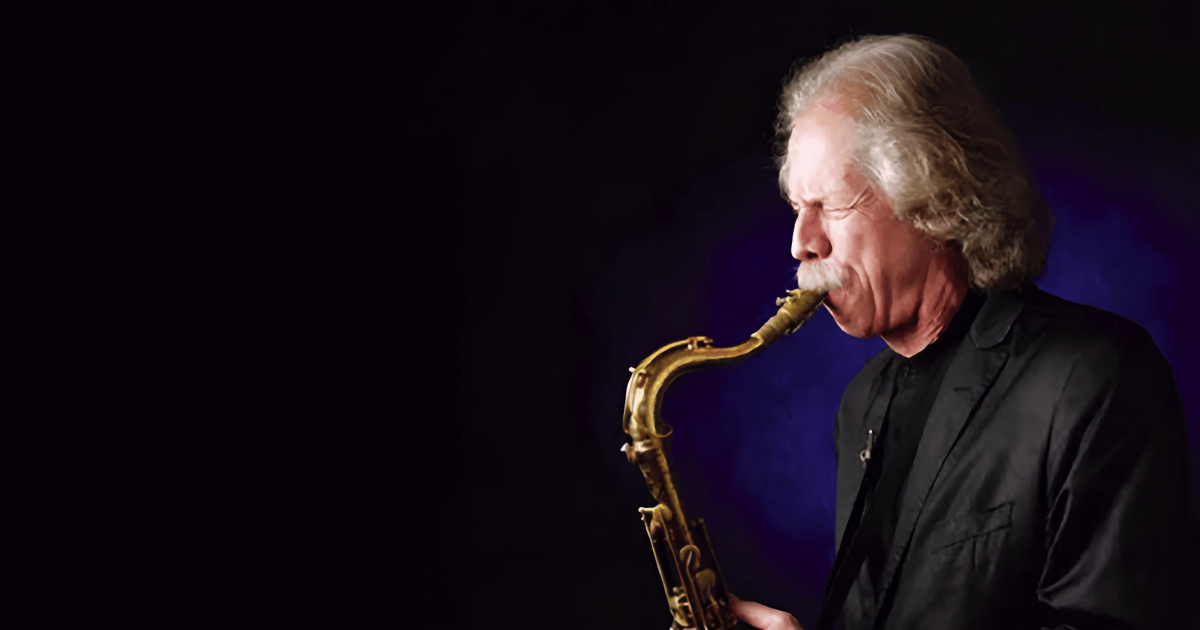
The first evening brought together two remarkable musicians whose careers have been shaped by decades of dedication to the living tradition of American rhythm and blues. Catalan pianist Lluís Coloma, one of Europe’s foremost ambassadors of boogie-woogie and blues piano, joined forces with the legendary American saxophonist Blue Lou Marini, forever associated with the unmistakable sound of The Blues Brothers while also possessing one of the most respected careers in contemporary jazz and studio performance.

From the very first notes, Coloma transformed the piano into an entire orchestra. His left hand established an irresistible rolling pulse rooted in the great boogie pianists, while his right hand painted dazzling melodic lines that danced effortlessly across the keyboard. Every phrase carried the warmth of New Orleans, the excitement of Kansas City, and the exuberance of Chicago’s rhythm-and-blues heritage, yet his performance never became an exercise in nostalgia. Instead, he breathed new life into these traditions, proving that authentic blues remains forever contemporary.
Across the stage stood Blue Lou Marini, whose saxophone possesses that increasingly rare quality found only in musicians who have lived inside the music for decades. His tone was rich without excess, powerful without force, lyrical without sentimentality. Every solo unfolded like a carefully crafted story—opening with elegant melodic simplicity before gradually expanding into sophisticated improvisations filled with swing, blues inflections, and subtle harmonic surprises.
What made the collaboration extraordinary was the complete absence of ego. Rather than competing for attention, Coloma and Marini continuously listened to one another, exchanging musical ideas with the ease of two lifelong conversationalists. The piano often anticipated the saxophone’s next phrase; the saxophone answered rhythmic accents before they fully emerged. Their dialogue became less a sequence of solos than a single, continuously evolving musical conversation in which every chorus invited another chapter.

Behind them, the rhythm section provided far more than accompaniment. Bass and drums established an elastic groove that breathed naturally, allowing every swing phrase to expand and contract with remarkable freedom. Their understated precision created the foundation upon which both leaders could explore spontaneous invention while never losing the irresistible pulse that encouraged smiles, dancing feet, and enthusiastic applause throughout the audience.
The atmosphere beneath the trees of Parc des Dryads became almost cinematic. Warm evening air, gentle movement among the branches, and the glowing stage lights transformed the venue into an outdoor jazz sanctuary where listeners were reminded that some music belongs not inside walls but beneath open skies. Blues, swing, rhythm and joy merged into one unforgettable celebration.
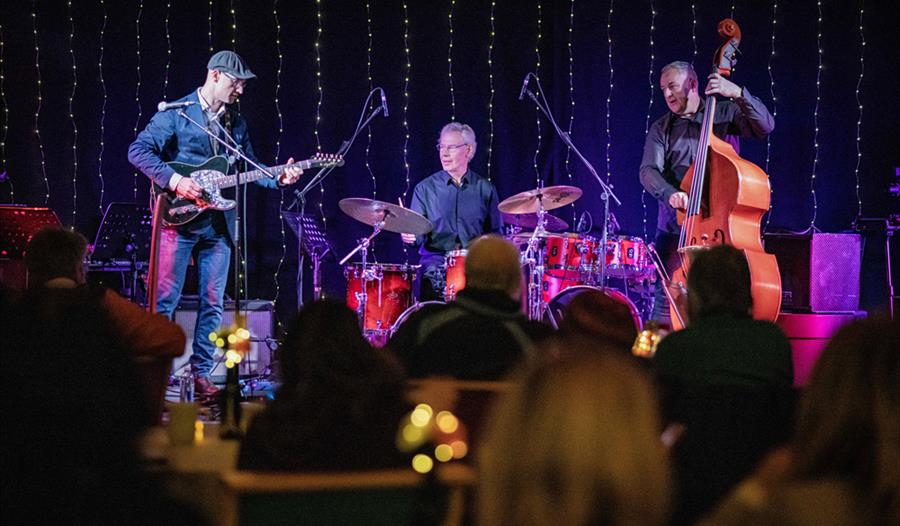
If the previous evening honored jazz’s enduring traditions, the following day offered an entirely different emotional landscape with the appearance of the Pete Roth Trio. Where Coloma and Marini celebrated extroverted groove, Pete Roth presented music of intimacy, subtlety, and modern harmonic imagination.
Roth’s guitar possesses an unusually vocal character. Rather than relying on dazzling technical display, every phrase emerged as though carefully spoken, allowing silence to become as meaningful as sound itself. His compositions unfolded patiently, inviting listeners into delicate musical spaces where every harmonic color mattered.
The trio functioned as a perfect example of democratic ensemble playing. No instrument dominated. Guitar, bass, and drums shared equal responsibility for shaping each composition, continuously exchanging roles between melody, harmony, rhythm, and texture. This remarkable balance created performances that felt fluid and conversational rather than hierarchical.
Roth’s harmonic language blended contemporary jazz with echoes of folk lyricism, impressionistic harmony, and subtle blues sensibility. At moments the music floated almost weightlessly; moments later it settled into gentle rhythmic currents that carried the audience through landscapes of quiet reflection. The trio demonstrated that modern jazz need not shout to command attention. Its greatest strength often lies in restraint, patience, and the confidence to allow every note sufficient space to resonate.
The audience responded with remarkable concentration. Rather than explosive applause interrupting every solo, listeners became partners in the performance, following the music’s smallest dynamic shifts and rewarding each completed piece with warm appreciation. It was an evening where attentive listening became an essential part of the artistic experience itself.
Together, these two concerts illustrated one of the defining achievements of the EU Jazz & Blues Festival 2026. Within the space of only two days, audiences experienced both the exuberant celebration of classic American rhythm and blues and the refined introspection of contemporary European jazz. Such programming reminds us that jazz is not confined to a single era, style, or geography. It remains a living, constantly evolving language whose vocabulary continues to expand through every generation of creative musicians.

Such artistic diversity does not happen by chance. It reflects thoughtful vision, deep musical understanding, and unwavering commitment to excellence.
For that reason, special recognition belongs to Olivia Peevas, Director and Artistic Director of the EU Jazz & Blues Festival. Throughout this remarkable festival she has demonstrated that successful artistic leadership is measured not simply by presenting distinguished performers, but by curating meaningful conversations between musical traditions, generations, and cultures.
Her programming reveals an instinctive understanding that a festival should tell a story. By placing artists like Lluís Coloma and Blue Lou Marini alongside contemporary voices such as the Pete Roth Trio, she creates an experience in which audiences travel naturally between history and innovation, exuberance and contemplation, American roots and European creativity. Each evening becomes another carefully written chapter in a larger artistic narrative celebrating jazz as a universal language without borders.

Olivia Peevas‘ vision extends beyond artistic excellence alone. The EU Jazz & Blues Festival has become a meeting place where musicians, audiences, cities, and cultures encounter one another through mutual respect and shared curiosity. In an age that often emphasizes difference, her festival quietly demonstrates the extraordinary power of music to unite people through listening, imagination, and common humanity.
The seventh and eighth days of the festival therefore represented far more than two outstanding concerts. They became living proof that jazz continues to flourish when visionary artistic leadership brings together exceptional musicians within inspiring settings, allowing creativity to unfold naturally beneath open skies. Long after the final notes disappeared into the summer evening above Parc des Dryads, what remained was not silence, but memory—the enduring resonance of artistry shared, friendships formed, and music that continues to echo far beyond the stage.
By Lauren Wulff


